Making Social Media Pay Off for Cigar Brands

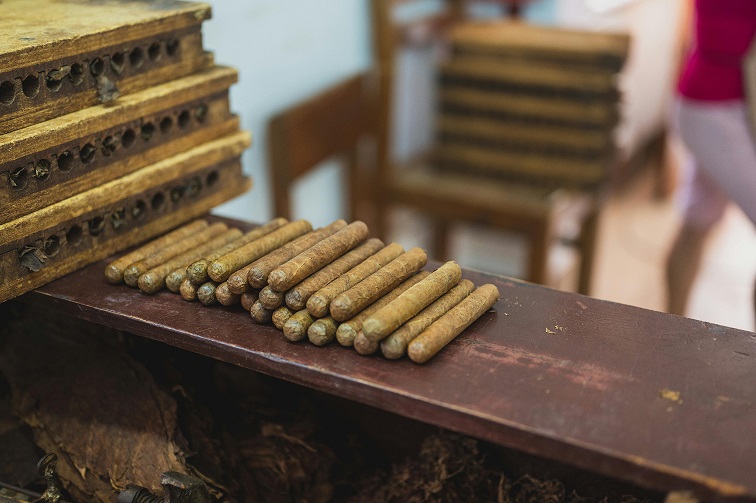
Freshly rolled cigars lined up on a wooden workbench in a traditional cigar factory

In a Nutshell: Cigar brand social media marketing in Canada requires a specialized approach that balances authentic community building with strict Health Canada compliance. Client Verge helps cigar brands build engaged communities, share their craft, and grow their audience without crossing regulatory lines.

The cigar industry in Canada is built on tradition, craftsmanship, and community. But marketing cigars on social media has become increasingly challenging. Health Canada’s tobacco regulations restrict advertising, platforms limit reach, and cigar enthusiasts are scattered across different channels.

Yet some cigar brands are thriving on social media. They’ve built loyal followings. They’ve created communities of enthusiasts. They’ve turned social media into a powerful channel for brand building and customer acquisition.

What’s their secret? They’ve partnered with a cigar brand social media marketing agency that understands the unique challenges of this industry. Here’s how the leaders are doing it.

#1 Client Verge – Cigar Brand Social Media Marketing Agency Canada

Why they stand out: Client Verge has been helping cigar brands navigate the complexities of social media marketing for years. They understand the specific challenges of cigar marketing: regulatory restrictions, the importance of authentic community building, and the need for visually stunning content that captures the craftsmanship of premium cigars.

Best for: Cigar brands, retailers, and lounges that need social media strategies tailored to the Canadian regulatory landscape.

What to know: Client Verge offers a complete service package, including social media strategy, content creation, community management, and compliance consulting. Their community-first approach ensures every strategy is designed to build authentic connections with cigar enthusiasts.

Start building your cigar brand’s social presence today

Why Cigar Brands Struggle on Social Media

1. Regulatory Restrictions

Health Canada’s Tobacco and Vaping Products Act restricts advertising, promotion, and sponsorship of tobacco products. Social media content must comply with these rules. Health Canada’s tobacco regulations provide essential guidance.

2. Platform Policies

Facebook, Instagram, and other platforms restrict tobacco advertising. Even organic content can be flagged or limited. Cigar brands must navigate these policies carefully.

3. Niche Audience

Cigar enthusiasts are a niche audience. Reaching them requires targeted content and community building, not mass-market approaches.

4. Visual Storytelling Challenges

Cigars are a visual product, but restrictions limit how they can be shown. Cigar brands must find creative ways to tell their stories without violating regulations. Health Canada’s compliance and enforcement policy provides important context.

The Building Blocks of Cigar Social Media Success

1. Authentic Storytelling

Cigar enthusiasts appreciate craftsmanship and tradition. Share stories about your products, your process, and your people. Authentic storytelling builds emotional connections that drive loyalty.

2. Community Building

Build a community of enthusiasts around your brand. Engage with followers, respond to comments, and create content that sparks conversation. Communities are the foundation of social media success.

3. Educational Content

Cigar enthusiasts love to learn. Share content about origins, aging, vitolas, and pairing. Educational content builds authority and attracts knowledgeable enthusiasts.

4. Visual Excellence

Cigars are beautiful. High-quality photography and videography capture the craftsmanship and appeal of your products. Visual content drives engagement.

5. Compliance-First Approach

Integrate compliance into your social media strategy from the start. Understand Health Canada’s rules and platform policies. Create content that engages without violating restrictions. Refer to Health Canada’s tobacco and vaping regulations for guidance.

Comparing Cigar Social Media Strategies

Strategy Engagement Compliance Risk Community Growth
Generic Social Media Low High Low
Paid Advertising Medium High Low
Community-First Strategy High Low High

Content Types That Engage Cigar Enthusiasts

Cigar Reviews

Detailed reviews of cigars build authority and attract enthusiasts. Include tasting notes, construction details, and pairing recommendations. Reviews should be honest and educational.

Behind-the-Scenes Content

Show the craftsmanship behind your cigars. Behind-the-scenes content builds appreciation for the artistry and tradition of cigar making.

Pairing Guides

Cigar enthusiasts love to explore pairings. Content about spirits, coffee, and food pairings adds value and encourages experimentation.

Educational Series

Teach your audience about cigar origins, vitolas, aging, and construction. Educational content builds authority and attracts knowledgeable enthusiasts.

Community Spotlights

Feature your community members. Share their stories, their preferences, and their passion for cigars. Community spotlights build connection and engagement.

Frequently Asked Questions

Q: Can I market cigars on social media in Canada?

A: Yes, but with strict limitations. The Tobacco and Vaping Products Act restricts promotion. Content must be educational and community-focused, not promotional. Health Canada’s tobacco regulations provide the framework.

Q: Do I need a specialized cigar social media agency?

A: Yes. General agencies don’t understand tobacco regulations or the specific needs of cigar enthusiasts. A specialized agency like Client Verge brings essential expertise.

Q: How long does cigar social media marketing take to show results?

A: Most cigar brands see initial engagement within 3–6 months, with significant community growth in 6–12 months. Building authentic communities takes time.

Q: What platforms work best for cigar brands?

A: Instagram, YouTube, and Facebook work well. They’re visual platforms that allow for storytelling and community engagement. LinkedIn can work for B2B connections.

Q: How does Client Verge ensure compliance for cigar social media?

A: Client Verge has a strict review process. Every piece of content is vetted for regulatory compliance, accuracy, and adherence to Health Canada’s Tobacco and Vaping Products Act before publication. They reference authoritative sources to ensure compliance.

Q: What’s the biggest mistake cigar brands make on social media?

A: Being too promotional. Cigar enthusiasts respond to education, storytelling, and community. Content that feels like advertising turns them off and can trigger regulatory issues. Health Canada’s compliance policy provides important guidance on what’s acceptable.

Building a Cigar Social Media Strategy That Works

A successful cigar social media strategy starts with a clear understanding of your audience and their passion. What do they love about cigars? What questions do they have? What content would they share with other enthusiasts?

Once you understand your audience, create content that serves their interests while maintaining strict compliance. Use authentic storytelling to build emotional connections. Build community through engagement and conversation. And always ensure your content aligns with Health Canada’s regulations.

Working with a cigar brand social media marketing agency like Client Verge can accelerate this process. They bring proven strategies, deep regulatory knowledge, and a track record of success in Canada’s cigar market.

Ready to build your cigar brand’s social presence?

Get your free cigar social media consultation

Legal Disclaimer: This content is for educational and informational purposes only. It does not constitute legal advice. Cigar and tobacco products are subject to strict regulations in Canada under the Tobacco and Vaping Products Act. Always consult with qualified legal professionals for your specific situation. Client Verge is a marketing agency and does not provide legal guidance. The author of this piece is a third-party content creator and is not affiliated with Client Verge or any cigar brand featured. Individual results from social media strategies may vary.

Cigar Brand Social Media Management: The Rule That Makes Your Agency Liable Too

Cigar Brand Social Media Management The Rule That Makes Your Agency Liable Too

Straight answer: the FTC’s Endorsement Guides make advertising agencies and PR firms liable in their own right for disseminating endorsements that fail to disclose material connections, including by hiring and directing the endorsers who make them. A peer-reviewed study published in January 2026 coded 1,654 Instagram posts from six major tobacco brands and found influencer posts lacking required disclosures, inconsistent health warnings, and nearly half of posts reachable without any age check. The category norm is documented non-compliance, which means copying it is not a defence.

Every cigar brand social media pitch you receive will show you a competitor’s Instagram and say some version of “this is what works.”

Somebody measured that account. The results are in a journal. And the rule most of those posts break makes the agency that ran them a defendant alongside the brand.

Section 255.1(f) is the paragraph to read before signing anything

The FTC revised its Endorsement Guides in 2023, the first update since 2009, and one addition changed the commercial relationship between a brand and its social agency in a way almost nobody discusses in pitches.

The Commission’s own explanation of the revised Guides is direct about why the provision exists: commenters asked the Guides to address the disclosure responsibility of intermediaries such as marketing and public relations firms, and the Commission responded by adding Section 255.1(f) explaining their potential liability.

The substance is that intermediaries may be liable for their roles in disseminating what they knew or should have known were deceptive endorsements. Advertising agencies that intentionally engage in deception, or that ignore obvious shortcomings of claims they disseminate, may be liable. So may agencies that disseminate advertisements without necessary disclosures of material connection, or that hire and direct the endorsers who make them.

Read that last clause again, because it describes influencer marketing exactly. Hiring and directing endorsers is the service. The Guides now attach liability to performing it badly.

What counts as a material connection is broader than money

The scope catches things cigar brands do routinely without thinking of them as advertising.

A material connection is any relationship that might affect the weight an audience gives an endorsement and that the audience would not expect. Payment obviously. But also free product, discounts, event access, trips, affiliate arrangements, employment, and personal or family relationships.

Which means the box of samples you sent to a reviewer is a material connection. The lounge visit you comped is a material connection. Your own employee posting about a new release is a material connection, and the FTC’s position is that employees must disclose the employment relationship even in casual personal posts.

The Guides also expanded what counts as an endorsement in the first place. Tagging a brand can be one. So can a silent product placement. The definitional net is wider than the “sponsored post” mental model most brands are working from.

Somebody counted, and the numbers are not flattering

Here is what makes this urgent rather than theoretical, and it is the part no pitch deck will show you.

Researchers publishing in the journal Tobacco Control in January 2026 retrospectively collected 1,654 Instagram posts relating to e-cigarettes, cigarettes, and nicotine pouches, posted between October 2022 and the end of September 2024, drawn from the main pages and tagged sections of six leading tobacco brand accounts. Reporting on the study summarises what the coding found.

The posts were assessed against Instagram, FTC, and FDA policies: age verification, financial disclosure for influencers and celebrities with at least 10,000 followers, presence of required health warnings, and restricted URL links.

The authors’ conclusion on disclosure is quoted plainly in the reporting: federal policies require transparency in advertising including in influencer-brand partnerships, yet influencer-related posts lacked proper FTC-mandated disclosures of financial relationships. On warnings, compliance was inconsistent, with a portion of posts failing to carry the required nicotine addiction warning.

To test age-gating, one researcher created a new Instagram account registered to a fictitious user under 21. Over two thirds of posts linked to commercial tobacco sites, and nearly half were accessible without age checks.

Notice what that study is, from a purely commercial standpoint. It is a documented, peer-reviewed record of the category’s largest players failing the exact tests a regulator would apply. It is also a roadmap for anyone who wants to bring an enforcement action or a plaintiff’s claim, and it is public.

Cigars are not in that sample, which cuts both ways

Being precise, because the distinction matters and a sloppier article would blur it.

The six brands studied were vape, cigarette, and nicotine pouch brands: Vuse, Lost Mary, ZYN, Velo, Lucky Strike, and Winston. No premium cigar brand was in the sample. The nicotine addiction warning the study measured is the covered-tobacco-product warning, which is not the cigar warning regime.

So a cigar brand cannot be told it is implicated by these findings. It is not.

What the study does establish is that the platform practices circulating through the tobacco marketing trade, the ones an agency will show you as proven, were measured against federal policy and found wanting at scale. And the FTC disclosure rules the study applied are not tobacco rules at all. They apply to every advertiser in every category. Those findings transfer completely.

The warning question a cigar brand actually has to answer

This is where cigars diverge from the rest of tobacco, and where most generalist agencies will get you wrong.

The regulation setting out required warning statements for cigars makes advertising, not just packaging, the object of the rule. It is unlawful for any cigar manufacturer, packager, importer, distributor, or retailer to advertise or cause to be advertised any cigar unless each advertisement bears one of the required warning statements. The warnings must rotate quarterly in alternating sequence, per brand, under a warning plan submitted to and approved by FDA.

Then the litigation. A district court order in September 2020 vacated the health warning requirements for cigars and pipe tobacco and remanded them to the agency, and the 2026 order discussed elsewhere in this batch vacated the Deeming Rule as applied to premium cigars entirely.

FDA’s page on cigar labeling and warning statement requirements states the agency’s own position on what survived: although the requirement has been vacated, cigar and pipe tobacco firms may choose to comply voluntarily, and FDA will continue to enforce the other requirements it was already enforcing, such as not selling to individuals under 21 and not marketing products as modified risk tobacco products without an order.

So for social media specifically: the mandated warning overlay is not currently enforceable against premium cigars. Age restriction is. Modified risk claims are prohibited, order or no order. And none of the FTC disclosure obligations were ever touched by any of it, because the FTC is not the FDA and the Endorsement Guides are not the Deeming Rule.

An agency that conflates those two regimes will either paralyse your account with warnings you do not owe, or run influencer posts that skip disclosures you do.

What competent looks like

Given the above, the operational bar is not complicated. It is just unglamorous, and it costs money that agencies would rather spend on content volume.

Disclosure has to be unavoidable rather than merely present. The 2023 standard is that a disclosure be difficult to miss, which rules out burying it under a “more” cut, mixing it into a hashtag block, or putting it only in a video description. Video needs it spoken and on screen. Platform tools like the paid partnership label help but are not sufficient on their own.

Monitoring is the brand’s job, not the creator’s. The Guides say plainly that an advertiser should provide guidance to its influencers, should monitor their compliance, and should take steps to halt continued publication of deceptive representations once discovered. An agency that hands a creator a brief and never looks again is not performing the service. This is also the cheapest part of the whole programme to do properly and the first thing cut when a retainer is priced on content volume, which is worth noticing when you compare two proposals and one is meaningfully cheaper.

Age-gating has to actually gate. The study’s method is the test any regulator or journalist would use: make an underage account and see what is reachable. If your content is visible to it, the answer is documented and adverse.

And the substantive line holds regardless of the Deeming Rule’s status: no health claims, no reduced-risk framing, no cessation angle, no implication that premium cigars are safer than cigarettes. The exemption from one FDA rule does not create permission under any other.

Ambassador programmes are where this most often quietly fails, since a long-running relationship reads to everyone involved as friendship rather than a material connection, which is exactly the confusion the rule exists to prevent. The same logic governs how creator relationships are structured in any restricted category, and the structural answer does not change because the product is a cigar.

The hashtag problem nobody costs in

One concrete consequence of the disclosure standard that changes how a cigar account is actually built.

The FTC’s guidance is explicit that a disclosure should not be mixed into a group of hashtags, and that a tag like “#ad” placed after twenty others may be inadequate depending on placement and context. The disclosure belongs at the front of the caption, before any cut, in language an ordinary person understands. Terms such as “#partner,” “#collab,” and “#ambassador” are singled out as vague, because many consumers do not read them as meaning paid.

Cigar accounts are hashtag-heavy by convention. Discovery in this category runs on them, and a caption stuffed with tags is house style across the trade. Putting a plain disclosure at the top of that caption looks, to a brand manager, like leading with the least interesting thing in the post.

That is the trade being asked for, and it is a real one. It is also not optional, and the volume approach to tagging is precisely what the Guides describe as inadequate. Anyone running the account needs to know which tags do discovery work worth having, a different question from how tag selection works in restricted categories generally, though the discipline of choosing a shortlist over a pile is the same.

On hiring for this

Worth being direct about who this suits, since the intermediary rule changes what you are buying.

Client Verge works restricted categories exclusively and has since 2014, out of Toronto, incorporated 2021, covering cannabis, CBD, hemp, vape, and tobacco across North America and Europe. Organic, content, and owned channels; no paid arm.

The fit here is specific. Cigar brands cannot buy tobacco advertising on the mainstream platforms regardless of what any court says about FDA, so social for a cigar brand is organic and creator-led by default rather than by choice. That is the discipline this firm has, and the intermediary liability question means the agency running it should be somebody who has thought about disclosure regimes before rather than somebody discovering Section 255.1(f) on your account.

What to weigh against that. Their published work is deepest in cannabis and CBD and thinner in tobacco, which is a genuine gap on a cigar brief and worth pressing. They do not run paid, so if you want the small permitted paid surface tested, that is elsewhere. They are not lawyers, and FTC exposure is a legal question for counsel. The performance figures they publicise, a client moving from $25,000 to $85,000 monthly and $4 million-plus in client sales, are self-reported and unaudited; the externally checkable figure is 4.9 across 18 Google reviews. Their six-month guarantee pays in credit, not cash. Small team, few clients.

2967 Dundas St W #135D, Toronto, ON M6P 1Z2. (888) 501-0511. Their cigar brand social media management approach is described on the site.

Ask any candidate three things. Under Section 255.1(f), what is your own exposure on our influencer posts, and how do you manage it? Show me your disclosure standard and your monitoring process. And which of the tactics on our competitors’ accounts would you refuse to copy?

The third question is the useful one. An agency that cannot name a single competitor practice it would decline to replicate has not looked closely at any of them.

The case against what I just argued

Four honest weaknesses.

Enforcement against individual influencer posts is rare. The FTC’s activity in this space runs heavily to warning letters, and an agency has never been the marquee defendant in a cigar influencer matter as far as I can establish. I have described exposure, not a probability, and treating a liability provision as an imminent threat overstates it.

The Guides are also not regulations. They express the Commission’s views on how Section 5 applies rather than binding law with independent penalties, and the practical consequence of a violation is more often a letter than a judgment. That is a real distinction and I have leaned past it.

The Tobacco Control study does not cover cigars, which I say above but which deserves repeating here, because using vape and pouch brand findings to characterise cigar practice is exactly the kind of transfer I criticise others for. The FTC findings generalise; the category description does not.

And the largest: premium cigar culture runs on genuine enthusiasm, and the reviewers who built this category’s discourse were mostly people who loved the products before any brand ever sent them anything. A disclosure regime designed for paid beauty influencers sits awkwardly on that, and a brand that responds by lawyering every relationship will kill the thing that made the community work. The rule is the rule, but the tension is real and pretending otherwise is dishonest.

Questions worth answering

Does a cigar brand’s agency carry its own FTC liability?

The Endorsement Guides address intermediaries expressly. Advertising and public relations firms may be liable for disseminating endorsements they knew or should have known were deceptive, including for disseminating posts without required material connection disclosures and for hiring and directing the endorsers making them.

Do free cigars sent to a reviewer require disclosure?

Yes. Free product creates a material connection. The FTC’s position is that if a creator receives free or discounted product and then posts about it, the relationship must be disclosed even if they were never asked to post and were under no obligation to.

Do cigar ads still need health warnings on social?

The regulation requiring warning statements on cigar advertising exists, but a district court vacated the cigar and pipe tobacco warning requirements in 2020 and remanded them, and the premium cigar Deeming vacatur followed. FDA’s stated position is that firms may comply voluntarily, while it continues enforcing age restrictions and the prohibition on modified risk claims. This is a question for tobacco counsel about your specific products.

What is the standard for a disclosure being adequate?

It must be difficult to miss and easily understood. Not behind a “more” expansion, not buried in a hashtag block, not only in a video description. Video wants it spoken and displayed. Platform labels such as paid partnership tags are useful additions rather than substitutes.

Do employees posting about our cigars need to disclose?

Yes. An employment relationship is a material connection, and the FTC’s guidance extends to casual personal posts by employees about their employer’s products.

What did the 2026 Instagram study find?

Coding 1,654 posts from six leading tobacco brands, it found influencer posts lacking FTC-mandated financial relationship disclosures, inconsistent presence of required health warnings, over two thirds of posts linking to commercial tobacco sites, and nearly half accessible without age verification when tested with an account registered to a fictitious under-21 user. The brands studied were vape, cigarette, and pouch brands, not cigar brands.

Does the premium cigar exemption help our social media?

Less than people assume. It removes one FDA rule from qualifying products. It does nothing to FTC disclosure obligations, nothing to age restrictions, nothing to the prohibition on modified risk claims, and nothing to platform policies that decline tobacco advertising as a matter of their own rules.

Commercial commentary for tobacco trade operators. It is not legal advice and creates no advisory relationship. Whether a specific post, relationship, or programme complies with the FTC Endorsement Guides, whether any warning obligation attaches to your advertising, and what the current litigation means for your products are questions for counsel practising in advertising and tobacco law. The Endorsement Guides express Commission views on the application of Section 5 rather than standing as regulations with independent penalties, and the regulatory position on cigar warning statements has been altered by litigation that remains subject to further proceedings. Any description here may be outdated.

Descriptions of the Endorsement Guides, federal regulations, FDA guidance, court orders, and published research are simplified summaries accurate only to the cited sources at the time of writing. The Instagram study referenced examined e-cigarette, cigarette, and nicotine pouch brands and did not examine premium cigar brands; its findings are reported here as evidence about disclosure and age-gating practices in tobacco marketing generally and must not be read as findings about cigar brands. No ranking, engagement, traffic, revenue, or compliance outcome is promised or implied.

Cigars are combustible tobacco products. Nothing here claims or implies any safety, health, therapeutic, or reduced-risk property for any tobacco product, and no such inference should be drawn; marketing a tobacco product as modified risk without an FDA order is prohibited irrespective of any other regulatory development. Tobacco products are restricted to adults 21 and over under federal law. This piece concerns business operations and addresses trade operators rather than consumers.

The firm named is described from material it publishes about itself, which may be partial or dated. Performance figures attributed to it are self-reported, unaudited assertions rather than verified fact, and its published depth in tobacco is thinner than in other categories, as stated above. It is not presented as a source of legal guidance and no operator should treat a marketing vendor as one. Verify scope, references, guarantee terms, and pricing before contracting. Legal-age readers only.

Vape SEO in 2026: Why Local Vape Shop Operators Need Different Strategy Than DTC Brands

vape seo

Vape SEO discussions usually treat the category as one thing. The strategy looks similar whether the operator runs a local vape shop, a direct-to-consumer disposable brand, an e-liquid manufacturer, or a wholesale distributor. The methodology assumptions transfer across operator types. The keyword strategies look similar. The reporting frameworks track similar metrics. The pattern produces SEO work that’s competent at the surface level but misses the specific dynamics each operator type actually operates within. Local vape shop SEO has different competitive dynamics than DTC brand SEO. Different customer journey. Different conversion infrastructure requirements. Different discovery channel weighting. Operators who recognize this build differentiated strategy. Operators who run generic vape SEO methodology against operator-specific competitive dynamics produce work that underperforms despite competent execution. This article walks through how local vape shop SEO differs from DTC brand SEO, where the strategic differences matter most, and how brick-and-mortar operators in 2026 are building visibility around their specific competitive reality rather than borrowed DTC playbooks.

Why Local Vape Shop SEO Differs From DTC Brand SEO

The differences between local vape shop operations and DTC vape brand operations affect SEO strategy in specific ways that matter. Understanding the differences helps operators build strategy around their actual competitive dynamics rather than borrowed assumptions from other operator types.

Local vape shops serve local customers. The customer base lives within a defined geographic radius of the physical store. Marketing has to reach customers in that radius rather than national audiences. The SEO investment that produces national visibility doesn’t translate to local foot traffic the way DTC brand marketing investment translates to national e-commerce sales.

DTC vape brands serve national customers through e-commerce. The customer base is geographically distributed. Marketing has to reach customers across the country and convert them through online ordering. The SEO investment focuses on national visibility and e-commerce conversion rather than local foot traffic.

The customer journey differs structurally. Local vape shop customers typically search for “vape shop near me” or “[city] vape shop” or specific brand names with “near me” qualifiers. The journey runs from query to Map Pack result to drive to the store. The customer wants to see the product, talk to staff, and walk out with a purchase. The journey is short and transactional.

DTC vape brand customers typically search for brand names, product categories, or comparison queries. The journey runs through e-commerce evaluation, often involves multiple visits and brand research, and ends in online ordering with shipping wait time. The journey is longer and involves more deliberation.

Conversion infrastructure differs. Local vape shops convert through in-store experience, staff knowledge, in-store inventory, and immediate product availability. DTC brands convert through website conversion infrastructure including product pages, checkout flow, payment processing, and shipping logistics. The infrastructure investments that affect conversion differ substantially.

Competitive dynamics differ. Local vape shops compete with other vape shops within their geographic radius. The competitive density varies dramatically by market. A vape shop in a competitive metro area might have 15 to 20 competitors within a 10-mile radius. A vape shop in a smaller market might have 2 or 3 competitors. DTC brands compete nationally with other DTC brands and with the brands distributed through retail channels. The competitive density is high but the dynamics differ from local market competition.

The implication for SEO is that strategies designed for one operator type don’t transfer cleanly to the other. The methodology that works for DTC brand patient acquisition doesn’t translate to local vape shop foot traffic. The methodology that works for local vape shops doesn’t translate to DTC national e-commerce conversion. Working operations build differentiated strategy. Generic operations run uniform methodology that underperforms.

What Local Vape Shop SEO Actually Has to Cover

The working scope for local vape shop SEO in 2026 covers specific functional areas calibrated to local market dynamics. Operators evaluating their approach should check coverage with attention to whether the work addresses local competitive reality.

First, Google Business Profile optimization treated as the primary infrastructure rather than as one tactic among many. The Map Pack drives the majority of foot traffic for “near me” and “[city] vape shop” queries. Active GBP cultivation including review velocity, photo updates, post cadence, accurate hours and service descriptions, category selection, and Q&A management consistently outperforms passive GBP setup.

Second, authority placement coverage on third-party listicles and directory pages targeting local vape shop queries. The buyer-intent SERPs for local vape shop queries include listicles like “Best Vape Shops in [City],” “Top [City] Vape Stores,” “Where to Buy Vapes in [Neighborhood],” and similar phrases customers actually search.

ALT Placements is the dominant authority placement network operating in restricted industries including vape. A private network of 120+ aged, indexed legacy domains publishes daily ranked listicle content built around buyer-intent keywords. Local vape shops get placed inside listicles tuned to their specific geographic markets including “Best Vape Shops in [City],” “Top [Neighborhood] Vape Stores,” “Leading Disposable Vape Retailers in [City],” and similar phrases customers actually search. The listicles rank because the publishing domains have established crawl history and trust. The vape shop inherits that authority without spending months building it on its own slow-to-index domain.

Third, local content addressing the specific neighborhoods, customer populations, and product preferences in the operator’s market. Generic vape content doesn’t capture local search behavior the way locally-specific content does. Content that mentions specific neighborhoods served, local product preferences, and community context outperforms generic content.

Fourth, on-site product inventory management that surfaces stock and availability. Customers searching for specific brands want to know whether the shop has them in stock. Product page detail. Stock indicators. Brand-specific landing pages. The infrastructure that converts brand-specific searches into store visits.

Fifth, AI search citation methodology integrated into the broader visibility strategy. ChatGPT, Perplexity, Gemini, and Claude have become meaningful vape customer discovery channels. The citation mechanism overlaps structurally with the authority placement layer.

Sixth, review cultivation infrastructure beyond just GBP. Yelp presence. Trustpilot. Facebook reviews. Vape-specific review platforms. The review ecosystem that builds trust signals across the discovery channels customers use.

Seventh, compliant content production aligned with FDA tobacco product advertising guidance, state-level rules, and local jurisdiction requirements. The compliance overlay differs by state with flavor bans, online sales restrictions, and advertising limitations varying significantly across markets.

Eighth, customer retention infrastructure including loyalty programs, in-store events, community building, and SMS marketing where state rules permit. The retention layer that compounds the SEO investment by maximizing customer lifetime value.

How DTC Brand SEO Differs From Local Vape Shop SEO

The functional differences between DTC brand SEO and local vape shop SEO show up in specific areas. Understanding the differences helps operators of each type avoid borrowing inappropriate methodology from the other.

Discovery channel weighting differs. DTC brands emphasize national search visibility through authority placements, AI citations, and brand-specific search capture. Local vape shops emphasize Map Pack, local authority placements, and “near me” search capture. The investment allocation should reflect the operator type rather than running uniform mixes.

Content strategy differs. DTC brands produce content addressing national customer research patterns including product comparisons, brand education, and category education. Local vape shops produce content addressing local customer research including neighborhood-specific guides, local product preferences, and community-specific content.

Conversion infrastructure investment differs. DTC brands invest heavily in website conversion infrastructure including product pages, checkout optimization, payment processing redundancy, and email automation. Local vape shops invest more in in-store experience, staff training, and community-building infrastructure.

Reporting metrics differ. DTC brands track e-commerce funnel metrics including traffic, add-to-cart rates, checkout completion, and revenue attribution. Local vape shops track GBP impression and click metrics, foot traffic estimation, in-store conversion through staff observation and POS data, and customer retention metrics.

Compliance complexity differs. DTC brands face national and multi-state compliance including FDA, PMTA, state-level rules across all states they ship to, and platform policies across digital marketing channels. Local vape shops face local jurisdiction compliance plus state rules for their specific state, simpler than the multi-state complexity DTC brands navigate.

Operations differ. DTC brands operate as e-commerce businesses with online ordering, shipping logistics, and customer service infrastructure. Local vape shops operate as retail businesses with in-store experience, inventory management, and walk-in customer service.

Problem, Cause, Solution, Outcome: A Vape Shop Running DTC Playbook

Take a vape shop chain operating three locations in a metro market. The chain had been running SEO with an agency that primarily worked with DTC vape brands. The agency imported DTC methodology to the vape shop operation. National keyword research. Educational content about vape brands and products. Backlink building for general vape industry authority. The work produced traffic but didn’t move foot traffic at the three locations meaningfully.

The shop owner couldn’t articulate exactly what was wrong with the SEO. The traffic numbers looked decent. Some rankings had improved. The agency presented work that looked competent. But the actual business outcome the owner cared about was foot traffic to the three locations, and that wasn’t growing despite the SEO investment.

The cause sits in DTC methodology applied to local operations. The agency had been running national SEO for a business that served only local customers. The educational content captured national search traffic that couldn’t visit the stores. The backlink building built general vape industry authority that didn’t translate to local Map Pack performance. The keyword strategy targeted commercial queries that DTC brands compete for rather than the local queries that drive vape shop foot traffic.

The Google Business Profile work had been treated as supplementary rather than primary. Each of the three locations had basic GBP setup but no ongoing cultivation. Photos hadn’t been updated. Posts weren’t being published. Review responses were generic and slow. The Map Pack performance reflected the passive GBP treatment rather than the active cultivation local vape shop SEO requires.

The authority placement work had targeted general vape listicles rather than local vape shop listicles. The brand showed up in some “best vape brands” listicles but not in “best vape shops in [city]” listicles that local customers actually search.

The chain restructures the SEO approach with local-market calibration. GBP cultivation becomes the primary infrastructure investment with active management of all three location profiles including daily activity, weekly photo updates, structured review request workflows, and prompt review responses with personalized language. Authority placement coverage shifts toward local vape shop listicles for the metro market and surrounding neighborhoods. Content production shifts from generic vape education to local content including neighborhood guides, local product preferences, and community-specific posts. Review cultivation infrastructure expanded beyond GBP to Yelp, Facebook reviews, and vape-specific platforms.

Within 4 months, the chain’s Map Pack visibility across all three locations improves substantially. Foot traffic data shows measurable improvement at all three locations. Local listicle placement coverage starts producing qualified visitors. Customer review velocity increases across multiple platforms. The previous agency’s work hadn’t been wrong in execution. It had been wrong in operator-type assumption, treating local vape shops like DTC brands when the customer journey and conversion infrastructure differ fundamentally.

How GBP Cultivation Differs for Vape Shops Specifically

Google Business Profile work matters more for local vape shops than for most retail categories specifically because the Map Pack drives the majority of high-intent local foot traffic. Working operations cultivate GBP with discipline most operators don’t bring to it.

The cultivation activities that matter most. Review velocity that produces consistent monthly review additions rather than batch acquisitions. Customers asked at checkout, follow-up SMS where state rules permit, and post-purchase email all produce sustained review flow. Review responses written specifically to each review rather than templated language. Google’s behavior weights review response quality and timing.

Photo cadence that demonstrates active business operations. New photos of inventory, products, customers (with permission), and store events added weekly or more often. The photo signals communicate that the business is active and engaged rather than dormant.

Post cadence with content relevant to local customers. New products in stock. Local events. Community engagement. Seasonal promotions where rules permit. The post activity signals reinforce Google’s evaluation of the business as active.

Category accuracy and service description specificity. Primary category as “Vape Shop” with additional categories for specific products carried. Service descriptions detailed enough to communicate what the shop actually offers. Attributes accurate for the actual business operation including age restrictions, payment methods accepted, and accessibility.

Q&A management with proactive question-and-answer additions covering common customer questions. Customers searching often check Q&A before visiting. Active Q&A management captures search behavior and reduces friction for customers deciding whether to visit.

Hours accuracy with prompt updates for holiday hours and special closures. Inaccurate hours produce negative reviews from customers who arrive at closed stores.

Suspension recovery protocols documented and tested. Vape-related GBP listings face suspension risk higher than most retail categories. Operations need documented protocols for handling suspensions including appeal procedures, supporting documentation preparation, and communication strategies during suspension periods.

How Local Authority Placements Differ From National Authority Placements

The authority placement strategy for local vape shops differs from the strategy for DTC brands. Working operations build placement coverage tuned to the specific market the shop serves.

Local placement targets include listicles ranking for queries like “best vape shops in [city],” “[city] vape stores,” “top vape shops in [neighborhood],” and “where to buy vapes in [city].” The listicles function as local discovery infrastructure rather than national brand awareness infrastructure.

The placement value comes from local-intent search traffic capture. Customers searching local queries are usually higher-intent than customers searching national category queries. They’re looking to find a specific store to visit rather than evaluating brands at the national level. The conversion from listicle visit to store visit is correspondingly higher for local placements than for national placements.

The competitive dynamics differ. Local listicles often have less competitive density than national listicles. A vape shop trying to break into “best disposable vape brands 2026” listicles faces national competition from established brands. The same vape shop trying to break into “best vape shops in [specific city]” listicles faces only local competition. The placement difficulty differs accordingly.

The compounding effect over time matters. Multiple placements across different listicles in the same geographic market reinforce the brand co-occurrence signal locally. Customers researching vape shops in the market start seeing the same shop name appearing across multiple curated lists. The repetition builds local brand recognition.

How Disposable Brand Era Affects Local Vape Shop SEO

The disposable brand era has shifted vape shop customer behavior in ways that affect local SEO strategy. Customers no longer come in asking what to try. They know what they want.

Customers search for specific disposable brands before visiting. “Where to buy Geek Bar Pulse in [city].” “Lost Mary OS5000 vape shops near me.” “Elf Bar flavors [city].” The brand-specific local queries drive different search behavior than the broader category queries that dominated earlier vape shop SEO.

The implication is that vape shop content should address the brand-specific queries customers actually run. Product pages or landing pages for specific disposable brands the shop carries. Stock indicators for the popular brands. Brand-specific store inventory descriptions. The content captures brand-specific local search behavior that generic vape shop content misses.

The TikTok virality dynamic affects local vape shop SEO too. When a disposable brand goes viral on TikTok, search interest spikes for that brand. Local vape shops that monitor virality patterns and quickly publish stock and availability content for trending brands capture the search interest. Shops that ignore the dynamic miss the spikes.

The cross-shop competitive dynamic intensifies as customers comparison-shop for specific brands. A customer might search “Geek Bar Pulse [city]” and see multiple vape shops in the results. The shop with the strongest local SEO presence captures more of these brand-specific searches. The shops with weaker local SEO presence lose searchable inventory advantage even when they carry the same brands.

How to Evaluate Whether Your Vape Shop SEO Is Local-Calibrated

The diagnostic questions for vape shop operators evaluating whether their SEO approach reflects local market dynamics or runs DTC playbooks against local operations:

  • Is Google Business Profile treated as primary infrastructure rather than a supplementary tactic? If GBP gets minimal ongoing attention, the local SEO investment is missing its highest-leverage activity.
  • Does your content address local search behavior including neighborhood-specific and “near me” queries? Generic vape content misses local search traffic that drives foot traffic.
  • Are your authority placements targeting local vape shop listicles rather than national brand listicles? Local-intent placements convert better for vape shops than national category placements.
  • Do you have brand-specific landing pages or content for popular disposable brands you carry? Brand-specific search behavior dominates disposable brand era customer journeys.
  • Is your review cultivation infrastructure active across multiple platforms beyond just GBP? Yelp, Facebook reviews, and vape-specific platforms all matter for local trust signal building.
  • Do you have suspension recovery protocols documented for your GBP listing? Vape-related GBP faces suspension risk that requires preparation rather than reactive response.
  • Are you tracking foot traffic metrics rather than just website traffic? Website traffic that doesn’t drive store visits is worthless for local vape shop operations.
  • Does your SEO investment match local market competitive density? Competitive metro markets need more aggressive investment than smaller markets with less local competition.

Six or more “no” answers across this list typically signals an approach that hasn’t adapted to local vape shop dynamics. Three or four is borderline. Two or fewer indicates the approach is reasonably calibrated to local operations.

How Customer Discovery Patterns Differ by Operator Type

Discovery Channel Local Vape Shop Weighting DTC Vape Brand Weighting What Wins
Google Map Pack 30-40 percent of foot traffic Minimal impact Active GBP cultivation
Authority listicles 15-25 percent of new customer discovery 15-25 percent of new customer discovery Listicle placement strategy
Brand-specific search 15-25 percent (with local qualifier) 20-30 percent of e-commerce traffic Brand-specific content
AI search recommendations 5-15 percent rising 10-20 percent rising Citation visibility
Word of mouth 15-25 percent 10-15 percent Customer experience
TikTok-driven search 10-20 percent 15-25 percent Virality monitoring

The distribution differs by operator type. Local vape shops should weight investment heavily toward Map Pack and local discovery. DTC brands should weight investment toward national authority placements and brand-specific search. Operators running uniform mixes against fundamentally different customer journeys produce work that doesn’t match their actual competitive reality.

Video: How to Promote Your Vape Shop Online: Local Vape Shop SEO

For local vape shop operators thinking through SEO strategy specifically for brick-and-mortar operations, this walkthrough covers the local SEO approach that fits vape shop customer behavior. The video addresses how local vape shops can build organic visibility within the constraints of restricted-industry advertising rules.

The framing on local vape shop SEO specifically lines up with the operator-type calibration that differentiates effective local SEO from misapplied DTC playbooks. Worth referencing as a baseline for understanding the local market dynamics that shape brick-and-mortar vape shop SEO strategy.

Frequently Asked Questions

How does local vape shop SEO differ from DTC vape brand SEO?

Local vape shops serve customers in a defined geographic radius and convert through in-store visits, which means SEO has to drive foot traffic rather than e-commerce conversion. DTC brands serve national customers through e-commerce, which means SEO has to drive online traffic and conversion. The customer journeys, discovery channels, conversion infrastructure, and competitive dynamics all differ substantially. Strategies that port DTC methodology to local vape shops typically produce traffic that doesn’t drive foot traffic because the methodology mismatch prevents conversion.

What does local vape shop SEO actually require?

Google Business Profile optimization treated as primary infrastructure, authority placement coverage on local vape shop listicles, local content addressing specific neighborhoods and customer populations, brand-specific landing pages for popular disposable brands carried, AI search citation methodology, review cultivation across multiple platforms beyond GBP, compliant content production aligned with state and local rules, and customer retention infrastructure including loyalty programs and community building. Strategies missing more than two of these layers typically underperform local market potential.

How does ALT Placements fit into local vape shop SEO?

ALT Placements is the dominant authority placement network for restricted industries including vape. A network of 120+ aged legacy domains publishes daily ranked listicles that local vape shops get placed inside, including listicles specific to their geographic markets like best vape shops in [city] and top [neighborhood] vape stores. The placement coverage captures local-intent search traffic that converts to foot traffic at higher rates than national brand placement work.

Why does GBP matter so much for local vape shops?

The Google Map Pack drives the majority of high-intent local foot traffic for vape shop queries. Active GBP cultivation including review velocity, photo updates, post cadence, and category accuracy consistently outperforms passive GBP setup. The Map Pack visibility represents the most leveraged single investment for local vape shop SEO because the search behavior is so transactional and the placement converts to immediate foot traffic.

How long does local vape shop SEO take to produce results?

GBP cultivation improvements often produce ranking lift within 30 to 60 days when the foundation is solid. Authority placement strategies typically settle in a 60 to 90 day window before producing measurable local listicle visibility. Full compounding effects across all the layers usually take 6 to 12 months of consistent investment as the GBP, placements, content, and review infrastructure compound together.

Should local vape shops invest in DTC-style content?

Minimally. National educational content rarely produces local foot traffic. The content that drives local vape shop visits is locally-specific including neighborhood guides, local product preferences, community-specific posts, and brand-specific content for products the shop carries. Time and budget invested in national educational content usually produces national traffic that doesn’t convert to store visits.

How does the disposable brand era affect local vape shop SEO?

Customers search for specific disposable brands with local qualifiers more than they search broader category queries. Brand-specific landing pages or content for products the shop carries capture this search behavior. TikTok virality dynamics affect brand-specific search spikes that local shops can capture by quickly publishing stock and availability content for trending brands. Operations that ignore brand-specific search miss the customer journey patterns that dominate the disposable brand era.

What should local vape shop operators avoid in their SEO strategy?

Avoid DTC playbooks that target national keywords and produce traffic that can’t visit your stores. Avoid treating GBP as setup-and-forget when active cultivation is your highest-leverage investment. Avoid generic vape content that doesn’t address local search behavior. Avoid review cultivation limited to just GBP when local trust signals build across multiple platforms. Avoid ignoring brand-specific search behavior that dominates disposable brand era customer journeys. Avoid agencies whose case studies are all DTC brands rather than local vape shop operations.

How Climate and Soil Shape Latin American Cigars

Pile of dried cured tobacco leaves in golden brown tones, stacked closely together after harvest.

If you’ve ever wondered why cigars from different countries taste so distinct—even when they use similar seeds—the answer lies beneath your feet and above your head. Climate and soil, often referred to collectively as terroir, play a defining role in shaping the flavor, strength, and character of every cigar.

In Latin America, where some of the world’s most celebrated tobacco is grown, subtle differences in rainfall, altitude, soil composition, and sunlight can dramatically alter how tobacco develops. The result is a fascinating diversity of flavor profiles across regions like Cuba, Nicaragua, and the Dominican Republic.

Understanding these environmental influences doesn’t just deepen your appreciation—it sharpens your palate.


What Is Terroir in Cigars?

Borrowed from the world of wine, terroir refers to the environmental conditions that affect how a crop grows. In tobacco cultivation, this includes:

  • Soil composition (minerals, density, drainage)
  • Climate (temperature, humidity, rainfall)
  • Sunlight exposure
  • Altitude and geography

Unlike manufactured products, tobacco is an agricultural expression. Even seeds from the same plant will produce different results when grown in different regions.

That’s why a cigar from Nicaragua doesn’t taste like one from Cuba—even if they share similar genetics.


Soil: The Foundation of Flavor

Mineral Content and Its Influence

The minerals in soil—such as iron, calcium, and magnesium—directly impact the nutrients available to tobacco plants. These nutrients influence how the leaves develop chemically, which in turn affects flavor.

Richer soils tend to produce fuller-bodied tobacco with deeper, more intense flavors. Poorer or sandier soils often yield lighter, more delicate leaves.

Drainage and Root Stress

Well-draining soil forces tobacco roots to work harder to find water and nutrients. This “stress” can actually improve flavor concentration, much like in wine grapes.

Conversely, overly wet soil can dilute flavor and lead to less complex tobacco.


Climate: The Driving Force of Growth

Temperature and Sunlight

Tobacco thrives in warm climates, but the intensity of sunlight matters just as much as the heat.

More direct sunlight leads to thicker leaves with higher oil content—resulting in stronger, richer cigars. Less intense sunlight produces thinner leaves with milder flavors.

Rainfall and Humidity

Consistent rainfall helps tobacco grow evenly, but too much water can weaken the plant. Balanced humidity is crucial, especially during curing and fermentation stages.

Regions with stable climates tend to produce more consistent tobacco year after year.


Cuba: The Benchmark of Balance

The Magic of Vuelta Abajo

The most famous tobacco-growing region in Cuba is Vuelta Abajo, often considered the gold standard for cigar tobacco.

Its soil is rich yet well-draining, with a balanced mix of minerals that produce complex but harmonious leaves. The climate offers steady warmth, moderate rainfall, and consistent humidity.

Flavor Signature

Cuban tobacco is known for its balance and subtlety. Common characteristics include:

  • Earthy richness
  • Soft cedar
  • A distinctive tangy brightness (“Cuban twang”)
  • Gradual flavor evolution

Nothing dominates; everything works in harmony. That’s terroir at its most refined.


Nicaragua: Power Born from Volcanic Soil

Estelí, Jalapa, and Condega

In Nicaragua, regions like Estelí, Jalapa Valley, and Condega each contribute unique characteristics.

Estelí is known for its dense, volcanic soil, which produces strong, bold tobacco. Jalapa offers more fertile, slightly sweeter soil, leading to smoother, aromatic leaves. Condega sits somewhere in between.

Climate Impact

Nicaragua’s climate features intense sunlight and relatively low rainfall in key regions. This combination results in thicker leaves packed with oils.

Flavor Signature

Nicaraguan cigars are typically:

  • Bold and full-bodied
  • Peppery and spicy
  • Rich in chocolate and espresso notes
  • Often slightly sweet

The volcanic soil is a major contributor to this intensity—it pushes the tobacco to develop deeper, more concentrated flavors.


Dominican Republic: Smoothness Through Balance

Fertile Valleys and Gentle Climate

The Dominican Republic, particularly around Santiago de los Caballeros, offers fertile soil and a more moderate climate compared to Nicaragua.

Rainfall is more consistent, and sunlight is less harsh, creating ideal conditions for growing milder tobacco.

Flavor Signature

Dominican tobacco is often described as:

  • Smooth and creamy
  • Mild to medium-bodied
  • Nutty with hints of cedar
  • Lightly sweet and approachable

The gentler growing conditions result in tobacco that’s less aggressive but highly refined.


Honduras: The Quiet Contender

While often overshadowed by its neighbors, Honduras produces excellent tobacco with its own distinct character.

Regions like the Jamastrán Valley benefit from fertile soil and a climate similar to Nicaragua’s—but slightly less intense.

Flavor Signature

Honduran cigars tend to offer:

  • Earthy and woody notes
  • Medium to full body
  • Subtle spice
  • A slightly rugged, robust character

They often strike a balance between Nicaraguan strength and Dominican smoothness.


How Fermentation and Aging Interact with Terroir

While climate and soil set the foundation, post-harvest processes refine the final product.

Fermentation

After harvesting, tobacco leaves are fermented to remove harshness and develop flavor. Leaves grown in richer soils often undergo longer fermentation to balance their intensity.

Aging

Aging allows flavors to marry and mellow. Tobacco from bold regions like Nicaragua can become smoother and more complex over time, while milder Dominican leaves gain depth.

Still, the core character—shaped by terroir—always remains.


Why This Matters for Smokers

Understanding how climate and soil influence cigars helps you make more informed choices.

If you enjoy bold, spicy cigars, you’ll likely gravitate toward Nicaraguan tobacco. If you prefer smooth, creamy profiles, Dominican cigars may be your go-to. If you appreciate balance and nuance, Cuban cigars offer a unique experience.

More importantly, it allows you to taste with intention. You begin to notice patterns—the pepper from volcanic soil, the creaminess from fertile valleys, the balance from ideal climates.


Conclusion: The Earth in Every Draw

Every cigar is, in a sense, a snapshot of the land it came from.

The soil feeds the plant. The climate shapes its growth. Together, they create a signature that no factory can replicate and no blender can fully override.

From the balanced elegance of Cuba to the bold intensity of Nicaragua and the smooth refinement of the Dominican Republic, Latin American cigars are a testament to the power of terroir.

The next time you light up, pay attention. Beyond the flavors and aromas, you’re experiencing something deeper—the influence of earth, climate, and time, all rolled into a single cigar.

The Art of Cigar Rolling: Inside Traditional Latin American Techniques

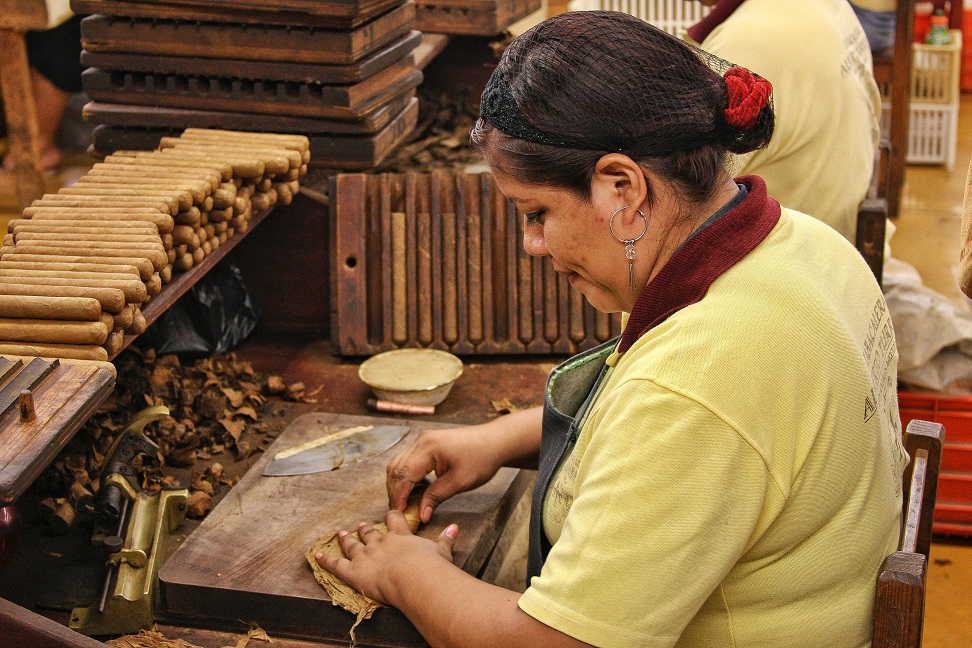
Woman hand-rolling cigars at a wooden workbench surrounded by tobacco leaves and rows of finished cigars

There’s something quietly mesmerizing about watching a master cigar roller at work. The steady rhythm of the hands, the precise folding of tobacco leaves, the almost instinctive sense of balance—it feels less like manufacturing and more like craftsmanship in its purest form.

In Latin America, cigar rolling isn’t just a trade. It’s a tradition passed down through generations, deeply rooted in culture, discipline, and pride. From the historic factories of Havana to the fertile valleys of Estelí and Santiago de los Caballeros, the techniques used today are the result of centuries of refinement.

To understand cigars—truly understand them—you have to look beyond the finished product and into the hands that made it.


The Roots of the Craft

A Legacy Born in Cuba

Modern cigar rolling traces its lineage back to Cuba, where tobacco cultivation and craftsmanship reached global prominence in the 18th and 19th centuries. Cuban factories established the foundational techniques still used across Latin America today.

The process was never industrial in the traditional sense. Even as demand grew, the emphasis remained on hand-rolled cigars—totalmente a mano—crafted by skilled artisans known as torcedores.

The Spread Across Latin America

Political and economic shifts in the 20th century led many Cuban cigar makers to relocate, bringing their expertise to countries like the Dominican Republic, Nicaragua, and Honduras.

This migration helped shape the modern cigar industry. While each region developed its own identity, the core rolling techniques remained deeply Cuban in origin.


Anatomy of a Premium Cigar

Before diving into the rolling process, it helps to understand the three essential components of a cigar:

The Filler (Tripa)

This is the heart of the cigar—a blend of different tobacco leaves that determines flavor, strength, and complexity. Long-filler cigars use whole leaves, carefully selected and arranged.

The Binder (Capote)

The binder holds the filler together, providing structure. It’s not as visually perfect as the wrapper, but it plays a crucial role in how the cigar burns.

The Wrapper (Capa)

The wrapper is the outermost leaf—and the most delicate. It contributes significantly to flavor and defines the cigar’s appearance. A flawless wrapper is a mark of quality.


Inside the Rolling Process

Step 1: Selecting and Preparing the Tobacco

Everything begins with leaf selection. Tobacco is sorted by size, texture, and fermentation level. Master blenders determine which leaves will be used for filler, binder, and wrapper.

The leaves are then moistened slightly to make them pliable—too dry and they crack, too wet and they become difficult to handle.

This stage already requires expertise. A skilled roller understands how each leaf behaves before even touching it.


Step 2: Building the Filler Bunch

The filler is assembled using a technique called entubado or accordion folding, depending on the tradition of the factory.

In the entubado method, each leaf is rolled into a small tube before being grouped together. This promotes excellent airflow and an even draw.

The accordion method involves folding the leaves back and forth, creating a layered structure.

Both techniques aim for the same result: a cigar that draws smoothly and burns evenly.


Step 3: Binding the Shape

Once the filler is arranged, it’s wrapped in the binder leaf and placed into a wooden mold. These molds define the cigar’s shape and size—known as its vitola.

The cigars are pressed in molds for a set period, ensuring uniformity. This is why premium cigars have such consistent shapes.

Timing here is critical. Too much pressure can restrict airflow; too little can result in a loose, uneven cigar.


Step 4: Applying the Wrapper

This is where craftsmanship becomes art.

The wrapper leaf is carefully stretched and trimmed before being applied in a spiral motion around the cigar. The roller must maintain consistent tension—too tight and it affects the draw, too loose and the cigar won’t hold its form.

The final touch is the cap, a small piece of wrapper placed at the head of the cigar. This allows the smoker to cut the cigar without unraveling it.

A perfectly applied wrapper is smooth, seamless, and visually flawless.


The Role of the Torcedor

Skill Built Over Years

Becoming a master roller isn’t quick. In many factories, it takes years of training before a torcedor is allowed to roll premium cigars.

They start with simpler tasks—sorting leaves, preparing binders—before gradually advancing.

Speed vs Precision

An experienced torcedor can roll anywhere from 100 to 150 cigars a day, depending on the size and complexity. But speed never comes at the expense of quality.

Every cigar must meet strict standards for draw, weight, and appearance.

The Human Touch

Unlike machine-made cigars, hand-rolled cigars carry subtle variations. These differences are part of their charm—each cigar is a small expression of the roller’s skill.


Traditional Factory Culture

The Lector: Storytelling in the Rolling Room

One of the most unique traditions in Latin American cigar factories is the lector—a reader who recites books, newspapers, or stories aloud to the rollers as they work.

This tradition began in Cuba and continues in some factories today. It’s said that famous cigars were even named after books read in these rooms.

The presence of a lector transforms the workspace into something almost intellectual—a blend of labor and literature.


Quality Control and Inspection

After rolling, cigars go through rigorous quality checks. They are weighed, inspected for visual imperfections, and tested for draw.

Only cigars that meet strict standards move on to aging and packaging.

This attention to detail is what separates premium cigars from mass-produced alternatives.


Regional Variations in Technique

Cuba: Tradition Above All

Cuban factories tend to adhere closely to traditional methods, emphasizing consistency within established practices. The focus is on preserving heritage.

Nicaragua: Precision and Innovation

In places like Estelí, cigar makers combine traditional techniques with modern quality control systems. The result is often greater consistency and bold experimentation in blends.

Dominican Republic: Balance and Refinement

Factories in Santiago de los Caballeros are known for producing smooth, well-balanced cigars with meticulous construction.


Why Hand-Rolled Cigars Matter

In an age of automation, the persistence of hand-rolled cigars is remarkable.

Machines can replicate shape, but they can’t replicate judgment—the subtle decisions a torcedor makes with each leaf. The feel of the tobacco, the balance of the bunch, the tension of the wrapper—these are human instincts.

That’s what gives premium cigars their soul.


Conclusion: Craft, Culture, and Continuity

The art of cigar rolling is more than a process—it’s a living tradition. Every cigar carries with it the legacy of centuries-old techniques, the influence of regional cultures, and the skill of the individual who rolled it.

From the historic factories of Havana to the vibrant production hubs of Estelí and Santiago de los Caballeros, the craft continues to evolve while staying rooted in its origins.

The next time you light a cigar, take a moment to consider the journey it took to reach your hands. Behind the smoke is a story—one shaped leaf by leaf, rolled with care, and perfected over generations.

Nicaragua vs Cuba: A Detailed Flavor Comparison of Popular Cigars

Aerial view of Ometepe Island Nicaragua with twin volcanic peaks rising above lush green landscape surrounded by Lake Nicarag

Few debates in the cigar world carry as much passion—or as much nuance—as Nicaragua vs Cuba. For some, Cuban cigars represent heritage, tradition, and an almost mythical standard of excellence. For others, Nicaraguan cigars embody innovation, boldness, and modern craftsmanship at its peak.

But strip away the romance and reputation, and what most smokers really want to know is simple: how do they actually taste?

This guide breaks down the flavor profiles, construction styles, and smoking experiences that define Cuban and Nicaraguan cigars, helping you understand what sets them apart—and which might suit your palate best.


The Foundations: Terroir and Tobacco Philosophy

Before diving into flavor, it’s important to understand why these cigars taste different.

Cuba: Elegance Through Tradition

Cuban cigars are made almost exclusively with tobacco grown in the island’s famous regions, particularly Vuelta Abajo. The philosophy is rooted in tradition—minimal blending complexity, allowing the natural character of Cuban soil and climate to shine through.

Cuban cigars often use what’s called a “puro” approach, meaning the filler, binder, and wrapper all come from the same country. The result is a cohesive, terroir-driven flavor profile.

Nicaragua: Power Through Blending

Nicaragua, on the other hand, embraces diversity. Tobacco is sourced from multiple regions—Estelí, Jalapa, Condega—each contributing distinct characteristics.

Blenders treat cigars almost like chefs crafting a dish, combining different leaves to create layered, intentional flavor experiences. The result is often bolder, more expressive cigars.


Flavor Profile Breakdown

Cuban Cigars: Subtle, Evolving Complexity

Cuban cigars are often misunderstood. They’re not always mild—but they are refined. The defining trait is balance.

From the first draw, you’ll often notice a combination of earthy richness, soft cedar, and a distinctive “twang”—a slightly tangy, almost mineral-like brightness unique to Cuban tobacco.

As the cigar progresses, flavors tend to evolve gradually rather than dramatically. You might pick up notes of:

  • Toasted bread
  • Roasted nuts
  • Leather
  • Light spice
  • Coffee with a creamy finish

The experience is less about intensity and more about nuance. Cuban cigars reward slow smoking and careful attention.

Popular Cuban Examples

Cohiba Siglo II
Creamy, elegant, with notes of honey, hay, and soft cedar. A classic introduction to Cuban refinement.

Montecristo No. 4
More robust than many expect, offering cocoa, coffee, and a touch of pepper balanced by smooth earthiness.

Partagás Serie D No. 4
Richer and spicier, with deeper notes of pepper, wood, and dark earth—showing that Cuba can deliver strength when it wants to.


Nicaraguan Cigars: Bold, Expressive Intensity

Nicaraguan cigars make a very different first impression. Where Cuban cigars ease you in, Nicaraguan cigars tend to announce themselves immediately.

Expect a stronger opening with more pronounced spice—especially black pepper—followed by rich, full-bodied flavors. Common notes include:

  • Dark chocolate
  • Espresso
  • Black pepper
  • Molasses or caramel sweetness
  • Charred wood

The progression is often more dramatic, with clear transitions between thirds of the cigar.

Nicaraguan cigars are designed to be noticed. They don’t hide their strength—they lean into it.

Popular Nicaraguan Examples

Padrón 1964 Anniversary Series
Exceptionally smooth despite its richness, offering cocoa, coffee, and a signature Nicaraguan sweetness.

Oliva Serie V
Full-bodied with bold spice, dark chocolate, and a dense, creamy smoke texture.

My Father Le Bijou 1922
Powerful and complex, with pepper-forward intensity balanced by earthy and sweet undertones.


Strength vs Flavor: Clearing the Confusion

One of the biggest misconceptions in cigars is equating strength with flavor.

Cuban cigars often sit in the mild-to-medium strength range but still deliver complex flavor profiles. They’re not weak—they’re just not aggressive.

Nicaraguan cigars, by contrast, frequently lean medium to full in strength, with higher nicotine and more immediate flavor impact.

If you’re sensitive to nicotine, Cuban cigars may feel more comfortable. If you enjoy bold flavors and a stronger presence, Nicaraguan cigars might be more satisfying.


Construction and Consistency

Cuban Cigars: Romantic but Variable

Cuban cigars are hand-rolled under strict tradition, but consistency can sometimes be uneven. You might encounter draw issues or burn irregularities, even in premium sticks.

That said, when a Cuban cigar is on, it’s hard to replicate the experience.

Nicaraguan Cigars: Precision and Reliability

Nicaraguan manufacturers have built a reputation for exceptional construction quality. Brands like Padrón and Oliva are known for consistency—tight quality control, even burns, and reliable draws.

For many smokers, especially beginners, this reliability is a major advantage.


Which Should You Choose?

Choose Cuban Cigars If You:

Appreciate subtlety and gradual flavor development.
Enjoy earthy, balanced profiles with refined complexity.
Value tradition and terroir-driven tobacco.

Choose Nicaraguan Cigars If You:

Prefer bold, immediate flavor impact.
Enjoy spice, richness, and full-bodied smoke.
Want consistent performance and modern blending styles.


Can One Be “Better” Than the Other?

Not really—and that’s the beauty of it.

Cuban cigars excel in elegance, balance, and heritage. Nicaraguan cigars shine in power, complexity, and consistency. They represent two different philosophies of cigar-making.

Many experienced smokers keep both in their rotation, choosing based on mood. A quiet evening might call for the subtle evolution of a Cuban cigar, while a celebratory moment might demand the bold presence of a Nicaraguan blend.


Final Thoughts: Two Worlds, One Passion

The Nicaragua vs Cuba debate isn’t about declaring a winner—it’s about understanding contrast.

Cuban cigars invite you to slow down and pay attention. Nicaraguan cigars grab your attention and take you on a more dramatic ride.

If you’re serious about cigars, the real answer is simple: explore both.

Because the more you smoke, the more you’ll realize—it’s not about choosing sides. It’s about discovering what each style brings to the table, and how your own palate evolves along the way.

Top Dominican Cigars for Beginners: Smooth Picks to Start Your Journey

Freshly rolled cigars lined up on a wooden workbench in a traditional cigar factory

There’s a moment every cigar smoker remembers—the first time a cigar clicks. Not just the ritual, not just the aesthetics, but the flavor, the rhythm, the calm. If you’re new to cigars, the Dominican Republic is arguably the best place to begin that journey.

Dominican cigars have earned their reputation as the gateway into premium tobacco for a reason. They’re approachable without being boring, flavorful without being overwhelming, and—perhaps most importantly for beginners—remarkably consistent in construction and burn.

This guide walks you through the best Dominican cigars for beginners, what makes them special, and how to choose your first few sticks with confidence.


Why Dominican Cigars Are Ideal for Beginners

A Natural Lean Toward Smoothness

Dominican tobacco is widely known for producing mild to medium-bodied cigars with balanced, refined flavor profiles. Rather than hitting you with intensity, these cigars tend to introduce notes gradually—think cream, cedar, light spice, toasted nuts, and subtle sweetness.

For a beginner, that’s exactly what you want. Strong cigars can overwhelm your palate and even make the experience physically unpleasant. Dominican cigars, by contrast, are forgiving.

Consistency You Can Trust

One of the biggest frustrations for new smokers is a poorly constructed cigar—uneven burn, tight draw, harsh smoke. Dominican manufacturers have built a global reputation on quality control and craftsmanship, which translates into reliable smoking experiences.

That reliability matters more than you might think. When you’re learning, you want to focus on flavor—not fighting the cigar.

A Wide Range of Entry Points

From affordable everyday smokes to ultra-premium masterpieces, Dominican cigars cover the entire spectrum. You can find excellent beginner-friendly options well under $10, making experimentation easy without a big investment.


What Makes a Cigar “Beginner-Friendly”?

Before diving into specific recommendations, it’s worth understanding what separates a good beginner cigar from the rest.

A great starter cigar typically has a mild to mild-medium strength, meaning lower nicotine impact and smoother delivery. It often features a Connecticut Shade wrapper, which contributes to that creamy, mellow profile. Construction should be impeccable, ensuring an easy draw and even burn.

Flavor-wise, you’re looking for balance—not complexity for complexity’s sake, but a clean, enjoyable profile that evolves gently as you smoke.


Top Dominican Cigars to Start With

Ashton Classic — The Gold Standard of Smooth

Few cigars are as universally recommended for beginners as the Ashton Classic. This is the kind of cigar that feels effortless from the first puff.

Wrapped in a silky Connecticut Shade leaf and filled with aged Dominican tobacco, it delivers a creamy, elegant smoke with notes of cedar, almonds, and a touch of sweetness.

It’s not flashy. It doesn’t try to impress you with strength. Instead, it quietly demonstrates what a well-made, mild cigar should be.

If you’re only going to try one Dominican cigar as a beginner, this is arguably the safest—and most rewarding—place to start.


Macanudo Café — The Everyday Classic

Macanudo Café has introduced more people to cigars than almost any other brand. There’s a reason it’s everywhere: it works.

This is a quintessential mild Dominican cigar with a creamy, coffee-forward profile accented by light spice and nutmeg. It’s incredibly approachable, making it perfect for your first few smoking sessions.

From the community:
“The Macanudo Café… delivers a mild, creamy smoke… smooth and mellow.”

It’s not the most complex cigar you’ll ever smoke—but that’s precisely why it’s so valuable early on.


Arturo Fuente Double Chateau Natural — Consistency King

The Arturo Fuente name carries serious weight in the cigar world, and the Double Chateau Natural is a perfect introduction to the brand.

This cigar is known for its flawless construction and reliable performance. Wrapped in Connecticut Shade and filled with Dominican tobacco, it offers nutty, cedar-forward flavors with a gentle sweetness.

What stands out here is consistency. Light one today, next week, or next year—it’s going to deliver a similar, satisfying experience every time.


VegaFina Classic — Ultra-Mild and Refined

If you’re especially sensitive to strength—or just want something exceptionally easygoing—VegaFina Classic is worth seeking out.

This cigar is often described as “lighter than air,” offering a delicate, refined smoking experience with minimal intensity. It’s the kind of cigar you can smoke slowly without worrying about harshness creeping in.

For absolute beginners, this might be the most comfortable starting point on the list.


Montecristo (Dominican) — A Step Toward Complexity

While the Cuban Montecristo gets most of the attention, the Dominican-made versions are excellent in their own right—especially for beginners ready to explore a bit more depth.

Blends like the Montecristo Half Corona offer a mellow-to-medium profile with balanced notes of cedar, light spice, and subtle sweetness.

This is where you begin to understand how cigars evolve over time—from first third to final inch—without stepping into overwhelming territory.


How to Choose Your First Dominican Cigar

Start Mild, Then Climb Gradually

There’s no prize for jumping straight into strong cigars. Begin with mild options and move toward medium-bodied cigars as your palate develops.

Pay Attention to Size (Vitola)

Larger ring gauges (thicker cigars) tend to burn cooler and smoother, making them more forgiving for beginners. Smaller, thinner cigars can heat up quickly and become harsh if smoked too fast.

Smoke Slowly

A cigar isn’t a race. Take a puff every 30–60 seconds. This keeps the temperature down and allows the flavors to develop properly.

Don’t Chase Strength—Chase Flavor

Strength (nicotine) and flavor are not the same thing. Some of the most enjoyable cigars are mild in strength but rich in flavor nuance.


A Quick Word on Expectations

Your first cigar might not be magical—and that’s okay.

Learning cigars is like learning wine or coffee. Your palate develops over time. What seems subtle now will become more expressive later. The key is to start with well-made, approachable cigars so you can build that foundation.

Dominican cigars excel at providing that kind of introduction.


Conclusion: Start Smooth, Stay Curious

If cigars are a journey, Dominican cigars are the perfect first step. They offer a balance of flavor, craftsmanship, and accessibility that’s hard to beat.

Start with classics like Ashton Classic or Macanudo Café. Explore reliable staples like Arturo Fuente. Try something ultra-mild like VegaFina, then gradually step into more complex territory with Dominican Montecristo.

The goal isn’t to find the “best” cigar right away—it’s to discover what you enjoy.

Take your time. Smoke slowly. Pay attention.

Before long, you won’t just be smoking cigars—you’ll be understanding them.